

1) BACKGROUND
Herefordshire, Ludlow and North Shropshire College (HLNSC) is a high-performing further education college located across the Marches, with six distinctive campuses in Hereford, Holme Lacy, Ludlow, Oswestry, Walford and Shrewsbury.
Originally established in 1949 as Herefordshire College of Technology and operating from a single campus in the City of Hereford, the College has grown in recent years through a series of mergers. In each case, effective and efficient management has enabled the College to continue supporting a broad range of high-quality local education and skills training opportunities across a predominantly rural area of approximately 2,000 square miles.
2) GEOGRAPHY AND DEMOGRAPHY
Herefordshire, Ludlow and North Shropshire College operates across Herefordshire and Shropshire, positioned on the western edge of the West Midlands region within the Welsh Marches.
The area is characterised by a predominantly rural landscape of significant natural and environmental value, including the Wye and Severn valleys, the Malvern and Shropshire Hills, and the Black Mountains.
The College serves a largely rural, sparsely populated catchment with dispersed communities, modest population growth, and an ageing demographic profile. These factors create distinct challenges for access, participation and skills development, particularly in relation to transport, workforce renewal and inclusive growth.
Herefordshire remains one of the least densely populated counties in England, with an estimated population of approximately 191,000 residents. The county continues to be predominantly rural, with around 53% of residents living in rural areas.
The principal population centres are:
• Hereford (ca 61,400)
• Leominster (ca. 11,200)
• Ross-on-Wye (ca. 11,400)
• Ledbury (ca. 8,300)
• Bromyard (ca. 3,900)
• Kington (ca. 2,400)
Shropshire (excluding Telford and Wrekin) has experienced steady population growth and now has an estimated population of approximately 329,000 residents. It is similarly sparsely populated and predominantly rural in character.
The main population centres include:
• Shrewsbury (ca. 77,000)
• Oswestry (ca. 18,200)
• Bridgnorth (ca. 11,900)
• Market Drayton (ca. 12,600)
• Ludlow (ca. 10,000)
Across Shropshire, population is widely dispersed across a large number of villages, hamlets and market towns, reinforcing the rural nature of the travel-to-learn and travel-to-work geography.
Both Herefordshire and Shropshire have older age profiles than the national average, with median ages of approximately 49 years in Herefordshire and 48 years in Shropshire.
Around 27% of Herefordshire residents are aged 65 and over, significantly higher than the England and Wales average (around 19%).
This demographic pattern reflects long-standing trends, including outward migration of younger people for higher education and employment, alongside inward migration of older residents.
Both counties remain among the least ethnically diverse areas in England:
In Herefordshire, approximately 8.9% of residents identify with an ethnicity other than White British, with “White Other” forming the largest minority group.
In Shropshire, around 96.7% of residents identify as White, with minority ethnic groups collectively making up a small proportion of the total population.
While diversity has increased modestly since 2011, both areas are still significantly less diverse than national and regional averages.
3) COLLEGE MISSION AND VISION
The College’s vision is:
To support students, communities and businesses to fully realise their potential by delivering high quality academic, technical, professional and community learning. We take pride in our legacy: successful students who are skilled, knowledgeable, enterprising, professional and resilient.
The College’s mission is:
To realise potential and support success.
4) KEY FACTS
In 2025-2026, the College:
- Trained ca. 2,400 full-time and 6,000 part-time students. The majority of full-time students are aged 16 to 18.
- Trained ca. 650 apprentices.
- Worked with more than 550 individual employers and companies.
- Enrolled more than 200 students with EHCPs
OUR COLLEGES
Herefordshire College
Herefordshire College is a large centre delivering vocational qualifications in the city of Hereford. It is the only general further education college in the county and offers a broad range of programmes for young people and adults from a wide geographical area, including the neighbouring counties of Worcestershire, Gloucestershire, Shropshire and Powys. The campus also serves as the College’s main administrative centre.
Speciality facilities include construction, carpentry, motor vehicle, engineering, plumbing and electrical workshops, as well as recording studios, dedicated computer networking laboratories, commercial kitchens and restaurant, hair and beauty salons, strength and conditioning gymnasium and a professional business suite.
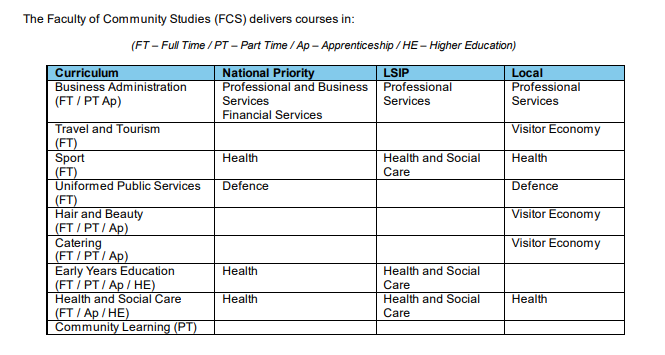
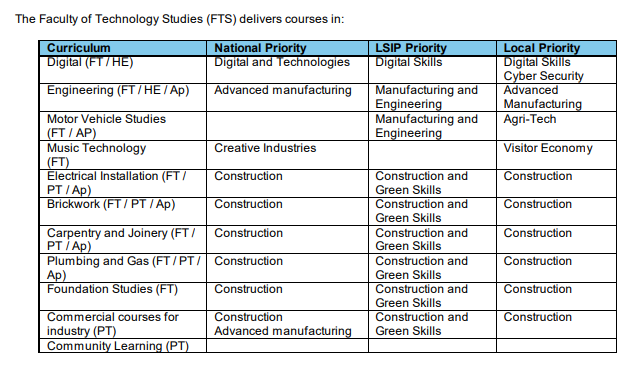
Herefordshire College’s provision is managed via two faculties.
Holme Lacy College
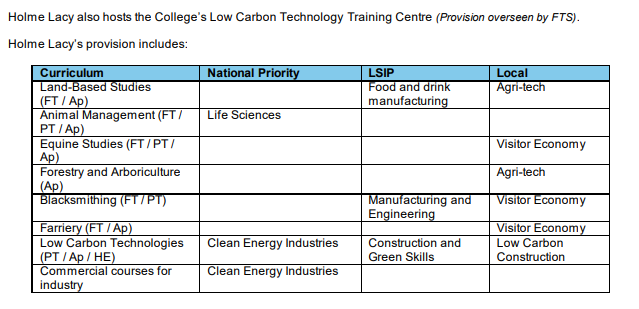
Following the disaggregation of the Pershore group of colleges, Holme Lacy was incorporated into the College structure in 2007. Situated approximately six miles from Hereford, Holme Lacy College and its associated 300 – hectare commercial farm, Pound Farm, form the country’s only fully organic further education facility and continue to deliver a broad portfolio of land-based courses.
Holme Lacy is one of only three centres in the UK approved to train apprentice farriers and is home to the National School of Blacksmithing.
Specialist facilities include Europe’s largest non-military forging facility, farriery workshops, newly built equine yard including indoor arena, and agricultural machinery workshop.
Ludlow Sixth Form College
Based in the centre of the south Shropshire market town of Ludlow, Ludlow Sixth Form College delivers a blend of A Levels and classroom-based vocational courses. It merged with Herefordshire College of Technology in 2013 to become Herefordshire and Ludlow College.
In 2025-2026, 250 students completed their studies at Ludlow Sixth Form college. The majority undertook full-time programmes of study by choosing three subjects from a traditional offer of 30 A level or equivalent qualifications.
Specialist facilities include science laboratories, sports hall, art, photography and media studios, and learning resource centre for independent study.
Walford College
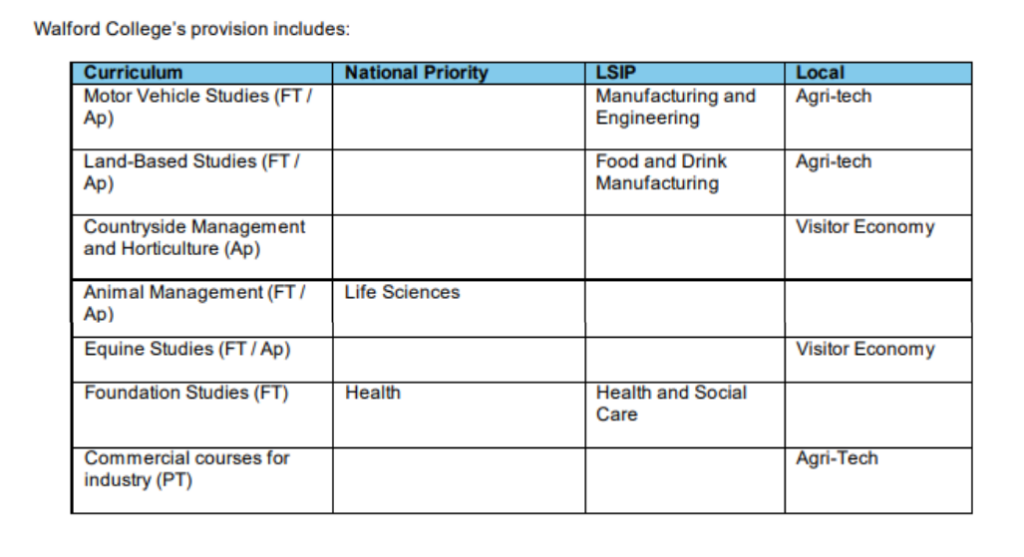
Walford College is a 300-hectare dairy farm and agricultural campus offering a range of land-based courses alongside provision in motor vehicle studies and SEND (Special Educational Needs and Disabilities). It also hosts a small facility run by Derwen College, a Shropshire-based specialist provider for students with a wide range of
learning difficulties.
During the 2025–2026 academic year, some of the apprenticeship provision managed by Country Training in Shrewsbury was moved to Walford College. This ensures better alignment between full-time and apprenticeship provision and creates a more coherent offer for prospective students.
Walford College includes residential facilities allowing students from further afield to stay on-site during the week. The residential units are also used by Park Ranger apprentices employed nationally by the National Trust.
Specialist facilities include a commercial farm dairy unit, animal management centre, equine unit including indoor arena, and motor vehicle workshops.
North Shropshire College
North Shropshire College (NSC) is located in the north Shropshire market town of Oswestry. The College is a GFE (General Further Education) facility and is home to a range of vocational and technical training courses.
During the 2025-2026 academic year, some of the apprenticeship provision managed by Country Training in Shrewsbury was moved to NSC. This ensures that there is better alignment between full-time and apprenticeship provision and a more coherent offer for prospective students.
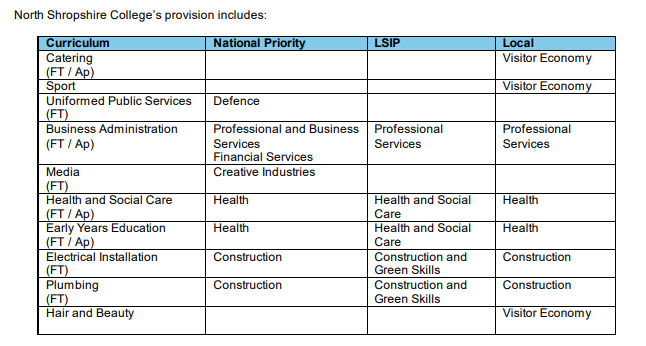
North Shropshire College’s facilities have improved in recent years and now include commercial hair and beauty salons, electrical and plumbing workshops, commercial kitchens and restaurant, strength and conditioning gymnasium, and science laboratories.
THE GATEWAY ADULT AND COMMUNITY CENTRE
Situated in the heart of Shrewsbury and within easy reach of the town’s main public transport hubs, the centre provides several important services to the local community. These include:
A variety of adult and community courses, ranging from art, dance, music, yoga, pottery and languages. The Gateway also delivers courses that support local residents to develop their basic skills, including English and maths.
The Gateway Gallery is a contemporary art gallery showcasing work from both emerging and established local artists. Exhibitions are managed in partnership with a well-regarded local charity, SADAA (Shrewsbury and District Arts Association).
6) ECONOMIC ENVIRONMENT
Herefordshire
Herefordshire’s economic output remains lower than both regional and national averages, with productivity continuing to lag behind the UK as a whole. Wage levels are also comparatively low, with average annual earnings of approximately £36,600.
Despite this, the county demonstrates a relatively strong labour market. Employment rates are high, with around 81% of working-age residents in employment. Unemployment remains below the national average at approximately 3.0% (ca.4% nationally). This reflects a stable labour market with strong participation, albeit concentrated in lower-wage sectors.
At 5.2% the proportion of NEETS (Not in Employment, Education or Training) is higher than the national and regional averages (3.4% / 3.3%). In addition to this, the latest available data also includes a significant number of ‘not knowns’ (7.3%). This is significantly higher than the proportion reported nationally and regionally (2.2% /2.9%). The disproportionate percentage of ‘not knowns’ introduces a level of doubt and gives rise for concern.
Herefordshire has a predominantly small-scale business base, with approximately 12,000 enterprises. Around 87% are micro-enterprises employing fewer than 10 people; ca.10% small businesses; ca.2% medium-sized firms;and
fewer than 1% large employers. This structure supports high levels of entrepreneurship and self-employment (approximately 12.6% of the workforce), but also constrains productivity growth, innovation capacity and inward
investment.
The economy is concentrated in a relatively small number of sectors. Manufacturing, distribution (including transport and retail), real estate, and public administration, education and health collectively account for the majority of economic output. A defining feature of Herefordshire’s economy is the strength of its land-based industries. Agriculture, forestry and fishing contribute an estimated 7–8% of GVA, significantly above the national average of around 1%, underlining the county’s agri-food specialism.
There are approximately 99,000 people in employment in Herefordshire. Employment is concentrated in the following sectors:
• Wholesale and retail
• Health and social work
• Manufacturing
• Hospitality and tourism
• Education and administrative services
Several structural factors shape the county’s economic performance:
• Ageing population: A relatively high proportion of older residents reduces the size of the working -age
population and increases demand for health and care services.
• Skills shortages: Employers report challenges recruiting for technical and higher-level roles, particularly in
engineering, construction and health.
• Rurality and connectivity: Transport infrastructure and geographical dispersion limit access to employment,
education and training opportunities.
• Digital infrastructure: While improving, broadband and mobile connectivity remain inconsistent, particularly in
rural areas.
Shropshire
Shropshire shares many characteristics with Herefordshire. Economic output and productivity levels are below national averages, and wages remain relatively low (around £32,944 annually compared to higher UK averages).
However, the labour market is strong, with high levels of economic activity (around 80%) and low unemployment of approximately 2.6% in 2025.
At 2.6%, the number of recorded NEETs is lower than national and regional comparisons and significantly better than the proportion recorded in Herefordshire.
The Shropshire economy is also dominated by small firms. There are approximately 15,700–15,800 enterprises, of which around 90% are micro-enterprises, approximately 8% are small, 1% are medium-sized, and fewer than 1% are large businesses. Self-employment is a notable feature, accounting for around 12.9% of the workforce,
reflecting a dispersed, rural and entrepreneurial economy.
Shropshire’s economic output is structured around a similar set of sectors to Herefordshire. The largest contributors to GVA include:
• Public administration, education and health
• Distribution, transport, accommodation and food services
• Real estate
• Manufacturing
Together, these sectors account for the majority of economic activity. Land-based industries remain significant but generate relatively low productivity compared to some neighbouring counties, including Herefordshire.
Around 157,000 residents are employed with the majority concentrated in the following sectors:
• Health and social care
• Wholesale and retail
• Manufacturing
• Education
Additionally, notable levels of employment are evident in construction, hospitality and tourism, and professional and administrative services.
A key feature is the level of out-commuting, with many residents travelling outside the county for higher-skilled and higher-paid employment opportunities.
Shropshire faces similar structural challenges to Herefordshire:
• Ageing population: Increasing pressure on health and care services and reducing labour supply
• Rural economy: Dispersed settlements and transport constraints limit access to labour markets
• Skills gaps: Under-representation in higher-value sectors such as finance, professional services and advanced
digital industries
• Productivity constraints: Linked to sector composition, SME dominance and outward commuting
However, the county benefits from strong environmental assets, a high quality of life, and growth potential in sectors such as advanced manufacturing, agri-tech, tourism, and emerging defence and cyber-related industries across
the wider region.
7) EDUCATION
There are sixteen secondary schools in Herefordshire of which three have sixth forms plus four specialist schools.
In Shropshire, there are twenty secondary schools, six of which offer post-16 provision, and two specialist schools.
In 2024–2025, GCSE attainment in English and maths in Herefordshire and Shropshire was broadly in line with national averages, with around 45–48% of pupils achieving a strong pass (grade 5+) and approximately 63–69% achieving a standard pass (grade 4+).
There are five other further education colleges across the two counties:
• Hereford College of Arts – A small specialist provider of arts education delivering an even mix of further education courses and degrees.
• Hereford Sixth Form College – A large and successful provider of level three academic and equivalent vocational courses. It is the founding member of the Heart of Mercia Multi Academy Trust.
• Shrewsbury College – A large and successful designated sixth form college delivering a wide range of academic, vocational and technical further education courses.
• The Royal National College for the Blind (Hereford) – A small but important specialist college delivering bespoke provision for the visually impaired.
• Derwen College (Oswestry) – An important specialist provider of courses for students with high levels of SEND.
Our campuses are neighbored by the following colleges based in surrounding counties:
• Coleg Cambria (Wrexham) – A large general further education college delivering a wide range of academic, vocational and technical courses.
• Coleg Powys (Newtown and Brecon and part of Grŵp NPTC) – Two small general further education campuses delivering a range of vocational and technical courses.
• Heart of Worcestershire College (Worcester) – A medium sized general further education college providing a range of vocational and technical courses.
7) CURRICULUM DEVELOPMENT
The College’s five-year strategic plan, approved in 2021, makes clear our responsibility to provide the broadest possible range of educational services in the rural communities we serve. This is particularly important given the sparsely populated demographic, paucity of alternative provision and challenges of local transport. Governors, leaders and managers are committed to ensuring that the business and employer community are central to our planning.
The Strategic Plan includes a number of key commitments. Strategic Commitment 4 states:
We will ensure that the provision fully supports the needs of our students and local economies.
This commitment is divided into four main areas of work. They are:
We will ensure that students have access to the training they need locally by continuing to offer a broad range of vocational and academic training opportunities in each of the areas we serve.
Access to services and transport are key issues for those living in rural areas, including the Marches. Prudent financial management ensures that we maintain a wide range of provision across a number of geographically dispersed centres.
A range of course levels are available to ensure students are able to progress locally. Entry Level, Level 1 and Level 2 courses typically provide access for students who have not yet achieved their key stage 4 thresholds. Level 3 provision is available for those who require a higher level of technical proficiency and/or aspire to higher
education. Levels 4&5 are available in some subject areas providing local higher education opportunities. Work is underway to broaden the range of higher technical courses available locally.
Timetables are constructed to minimise travel requirements and fully utilise students’ time at College. Three fullday attendance patterns also support those who want, or need, to work. This is particularly beneficial for those students who work in industries allied to their main programme of study.
A broad range of apprenticeships are offered across the Marches. The College continues to support apprenticeship delivery in more expensive, capital-intensive areas of work. In some cases, apprentices would not otherwise be
able to access this training locally. Additionally, flexible apprenticeship delivery patterns ensure that each sector is able to access training that suits their business needs.
We provide comprehensive support for students with identified learning and/or physical needs. This includes on – programme learning support and a number of courses specifically designed to educate and progress those with higher levels of need.
We offer land-based provision from two separate campuses, Walford College in the north of Shropshire and Holme Lacy College in Herefordshire. Whilst Walford College’s farm is predominantly dairy, mirroring the local agricultural economy, Holme Lacy trains students on a mixed arable and livestock farm estate. Additionally, Holme Lacy College’s farm, Pound Farm, is the only fully organic further education facility in the UK.
We support specialist training of national and international importance. Holme Lacy College hosts the National School of Blacksmithing; the largest forging facility in Europe and an international centre of excellence. Holme Lacy College is also one of only three accredited centres in the United Kingdom to deliver training for farriers.
HLNSC has developed and maintains provision in forestry and arboriculture.
We will develop a curriculum strategy that aligns with the needs of employers in each of the communities we serve.
We determine curriculum intent with employer input underpinned by local workforce data. This ensures the knowledge, skills and behaviours we teach align with employer need. We deliver both hard and soft skills to ensure students can progress successfully towards employment.
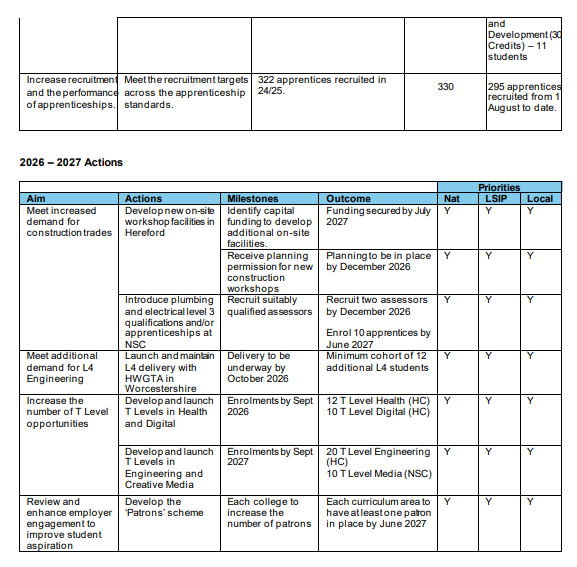
Additionally, we encourage employers to influence the curriculum by providing opportunities for them to comment and discuss their needs with curriculum delivery teams. Over the last academic year, we have begun to develop a network of employer patrons; one for each curriculum area. Patrons offer curriculum teams advice on delivery and share their expertise with students.
The College delivers apprenticeship provision that is responsive to the needs of individuals and their employers. The use of industry expert assessors to undertake workplace visits ensures that the training is bespoke and contextualised. Additional training is agreed and delivered where a specific need is identified.
College managers pay close attention to local skills planning, including the Local Skills Improvement Plan and local authorities’ economic strategies. The College actively engages with employer representative groups. These include:
• Marches LSIP Board
• Hereford and Worcestershire Chamber of Commerce
• Shropshire Chamber of Commerce
• Herefordshire Business and Growth Board
• Shropshire Economic Forum
• Herefordshire Skills Board
• National Farmers Union
• NHS Apprenticeship Hub
HLNSC is responsive to the needs of employers and offers a range of training to meet workplace requirements. The offer, flexible depending on need, includes examples such as; higher-level engineering, welding, forging, agricultural competency qualifications such as chainsaw operator, crop spraying, tractor driving, off-road vehicles or telehandler operator, leadership and management and CIPD. Additionally, the College delivers training for industry accreditation, including; 18th Regulations for Electricians; accreditation for heating and gas engineers; MOT and Air-conditioning for motor mechanics; AAT Accountancy and CIPD for personnel professionals.
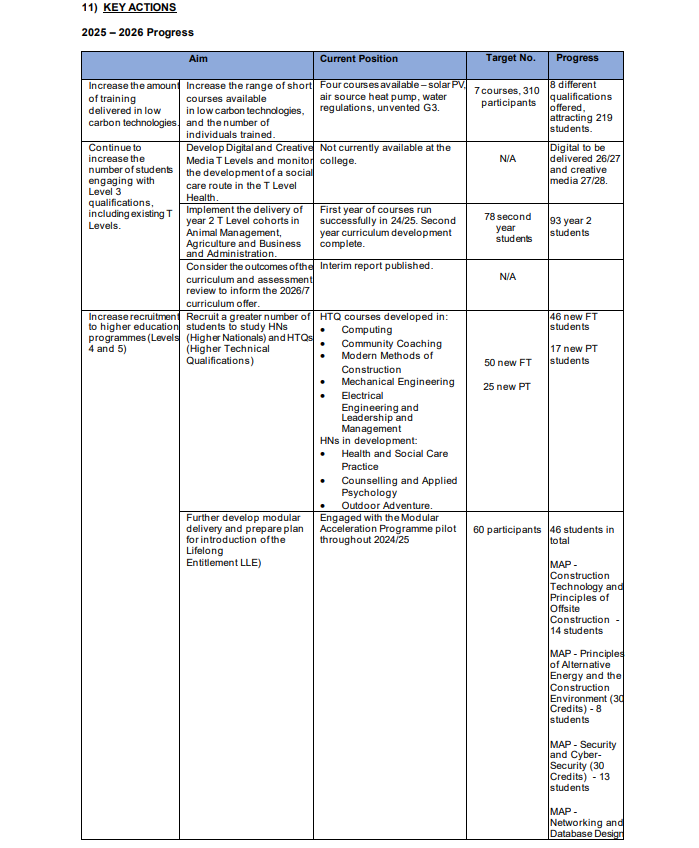
The College has developed the facilities and provision to train plumbers and electricians to install low carbon technologies including ground and air source heat pump systems, battery storage, solar energy generation systems and retrofit technologies.
Curriculum teams engage with key strategic employers and employer representative groups to discuss training needs and develop provision. For example, by working closely with the Farriery Registration Council and the
Worshipful Company of Farriers we ensure that training is industry specific and of a very high standard. The National School of Blacksmithing, based at Holme Lacy College, works with leading industry organisations such as the British Artists Blacksmithing Association to ensure that this unique facility delivers the training needed to the highest standard. Engagement with organisations such as LIC and the NFU ensure that the College’s agricultural provision is an exemplar, both for students and for the local agricultural industry.
We will work in partnership with other providers to ensure that our offer aligns with theirs to meet the needs of students and employers.
There are four further education colleges in the City of Hereford. Each college makes a unique and complementary contribution to Herefordshire’s post-16 landscape, ensuring that a full range of opportunities is available to young people and adults. Regular meetings ensure that we understand our educational role and help us plan a curriculum that is complementary. We also enjoy a strong and developing relationship with Herefordshire’s new university, NMITE.
Regular meetings with schools and membership of bodies such as the Association of Secondary Heads ensure that we remain cognisant of their needs and are well placed to support them in achieving their Gatsby benchmarks.
The College works alongside secondary school partners across the region to support students’ understanding of post-16 opportunities. Annual events such as Meet Your Future provide school pupils with an opportunity to engage
with vocational education before committing to post-16 study.
The College ensures that it remains aligned with other post-16 providers through membership of a number of regional provider partnership networks. These include; SWAOC (Shropshire Wrekin Association of Colleges), MEP (Marches Education Partnership), Herefordshire and Worcestershire Principals Group and Landex (Land Based Colleges Aspiring to Excellence). Additionally, senior managers meet regularly with colleagues from other local colleges to better understand their offer and share ideas. These include our neighbours in Worcestershire and Powys.
Where appropriate, the College partners with others to deliver courses required by local employers and to support national needs. Examples include:
HWGTA (Herefordshire and Worcestershire Group Training Association) to deliver HNCs in Engineering to their higher-level apprentices. We are in the process of replicating this provision for their employers in Worcestershire.
Hereford College of Arts to deliver the country’s only BA(Hons) in Blacksmithing
Warwickshire College Group, Myerscough College and the Farriery Registration Council to deliver the apprenticeship standard in Farriery.
HLNSC hosts a dedicated University Centre developed in partnership with the University of Worcester. This relationship facilitates and promotes the delivery of higher education programmes in Hereford.
We are currently working alongside Dudley College of Technology and others as a member of the West Midlands Construction Technical Excellence College.
Worcestershire LEP (Local Enterprise Partnership) and the DWP to deliver skills boot camps.
Work with Herefordshire County Council’s scrutiny committee to understand the above average number of NEETs and disproportionately high percentage of 16- to 18-year-olds whose economic status is currently unknown.
We will work alongside other stakeholders to improve the socioeconomic landscape by up-skilling the community and increasing productivity.
We work with local business boards, skills boards, chambers of commerce, Midland Net Zero, MCS, the NHS and other representative bodies to ensure that the College remains closely aligned with the local economy.
Combined funding from the LEP, LSIF and SDF supported the development of the Low Carbon Technology Training Centre at Holme Lacy College. Since opening, it has upskilled and accredited more than 300 individuals and regional businesses.
9) LOCAL NEEDS DUTY
Governors regularly review the College’s provision. The current five-year strategic plan, approved by the Corporation in 2021, acknowledges our role in providing a broad range of courses to serve the needs of our rural, sparsely populated and widely distributed population.
This has resulted in a number of key strategies that underpin the College’s curriculum. Examples include:
• Balancing departmental contribution rates across campuses so that the broadest range of vocational options are available to students in both Herefordshire and Shropshire.
• Maintaining expensive provision that is important to the local economy including agriculture and other key land-based industries.
• Maintaining niche provision of national importance such as Blacksmithing, Farriery and Forestry.
• In Hereford, the College chooses not to deliver programmes well served by our neighbours, Hereford Sixth Form College and Hereford College of Arts. In Shropshire, North Shropshire College no longer delivers A Levels as a comprehensive offer is already available locally.
• The withdrawal of adult provision from towns served by other providers. This includes the closure of small delivery centres in Telford and Whitchurch.
• Governors have agreed to support the development of new provision that aligned with national, regional and local priorities. This includes approval for significant investments in low carbon, construction and land-based provision. As well as their blessing to engage with national priorities such as Skills Bootcamps, T Levels and the Modular Acceleration Programme.
• Governors support the decisions to work in partnership with other local providers to develop curriculum that addresses identified local skills needs.
Governors have established a rolling three-year programme to review the College’s curriculum. In addition to this, annual changes are discussed and agreed by the Corporation’s Curriculum and Quality Committee.
10) INCLUSION
HLNSC is committed to fostering a fully inclusive environment in which every learner is valued, respected, and supported to achieve their potential. We recognise that our students come from diverse backgrounds, with a wide range of experiences, abilities, and aspirations, and we see this diversity as a strength that enriches our college
community.
We are committed to ensuring equitable access to education, training, and meaningful progression opportunities for all learners. This includes removing barriers to participation and attainment, whether they arise from learning needs, disabilities, socio-economic disadvantage, cultural background, or personal circumstances. Our curriculum, support services, and learning environments are designed to enable all students to engage fully and succeed.
We provide tailored support to meet individual needs, including high-quality additional learning support, specialist interventions, and pastoral care. We work proactively to identify and support students at risk of disengagement, ensuring that every learner is given the opportunity to remain in education, develop their skills, and progress confidently into employment, further study, or apprenticeships.
Our teaching staff adopt inclusive practices that promote participation, challenge, and achievement for all learners. We embed equality, diversity, and inclusion into curriculum design and delivery, ensuring that teaching reflects a broad range of perspectives and experiences. We encourage a culture of high expectations, where all students are supported to achieve ambitious outcomes.
We are committed to maintaining a safe, welcoming, and respectful college environment where discrimination, harassment, and bullying are not tolerated. We actively promote mutual respect, understanding, and a strong sense of belonging among students and staff.
Inclusion extends beyond the classroom. We work with schools, employers, local authorities, and community organisations to support inclusive pathways and ensure that all learners—particularly those from underrepresented or disadvantaged groups—can access opportunities that enable them to thrive.
We regularly review our inclusive practices and outcomes, using data and student voice to identify areas for improvement. We are committed to continuously strengthening our approach to inclusion to ensure that all learners
succeed and progress.
We pay particular attention to the recently announced SEND reforms and will work with partners to achieve the best possible transition between the old and new systems.
Inclusive Mainstream Fund
The additional funding received will be used in the following ways:
• Work with local specialist partners to up skill mainstream delivery staff. Priority will be given to those who deliver on level one and two programmes.
• Deliver teaching, learning and assessment training through an inclusive lens to support and strengthen adaptive teaching strategies.
• Adapt our admissions systems to fully support a post-EHCP system
• Review our entry level Foundation Studies programmes in Hereford to ensure the broadest range of opportunities
• Review the relationship between entry level and level one provision to maximise progression
KEY ACTIONS
8. Corporation Statement
This accountability statement and plan was reviewed and approved by the Board of Governors on the 7th July 2026.
Lorem ipsum dolor sit amet, consectetur adipiscing elit. Ut elit tellus, luctus nec ullamcorper mattis, pulvinar dapibus leo.
Lorem ipsum dolor sit amet, consectetur adipiscing elit. Ut elit tellus, luctus nec ullamcorper mattis, pulvinar dapibus leo.